A common worry in data center debates is that ordinary households will end up paying for the power lines and substations that a big facility needs. These data center grid costs are a fair thing to ask about, and regulators are now answering the question in writing.
The public record shows that data centers can pay their own way and help the grid grow at the same time, as long as the rules are clear.
Who pays data center grid costs today
The Virginia legislature asked its research agency to look at this in the largest data center market in the country. The JLARC report on data centers in Virginia found that data centers are currently paying their full cost of service. Dominion requires data centers to make minimum payments that fully recover the cost of the distribution substations built to serve them. The electric cooperatives in the study require data centers to pay directly for new substations as they are built.
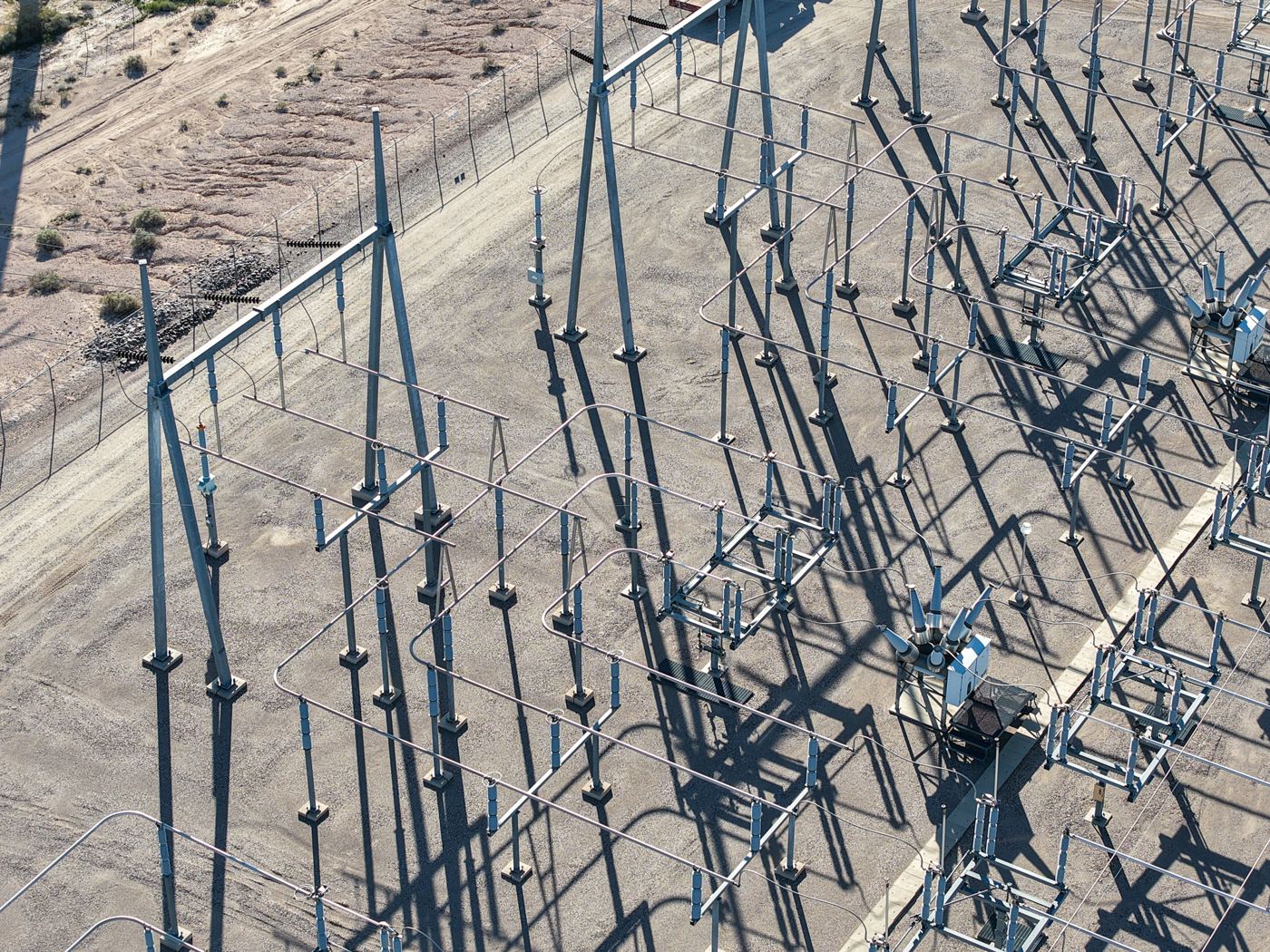
Those substations are large. Data center loads are usually so big that they connect straight to transmission lines through a substation that serves one or a few customers. When the customer carries the cost of that equipment, the cost stays off everyone else’s bill.
What regulators are requiring now
The rules are getting tighter. In a fact sheet on its 2026 Rider T1 decision, the Virginia State Corporation Commission said it approved a framework that requires large customers to fund the direct connect transmission facilities built to serve them. The policy applies to new situations where those facilities would not be built if not for the large customer. The Commission also approved an 85 percent minimum transmission demand charge for certain large customers starting January 1, 2027. It cited evidence that its updated method would cut the projected Rider T1 increase for a typical residential customer using 1,000 kilowatt hours from $2.90 to 94 cents a month.
Oregon went further in its order on the large load tariff for Portland General Electric, entered on May 7, 2026. Following a new state law, the Public Utility Commission created a separate rate class for large data centers. It set minimum transmission and generation charges at 90 percent of contracted capacity, a flat distribution charge covering 100 percent of the cost to expand the distribution system, minimum contract lengths and exit fees. The Commission also ruled that when a transmission asset is built to serve a single customer, its cost should be assigned directly to that customer.
Why long contracts and minimum charges matter
These terms protect the utility and its other customers from a stranded asset, which is equipment built for a customer who later leaves or uses less power than planned. The Oregon Commission explained that larger customers create greater risk of stranded assets. Its contract rule starts at 10 years for a 20 megawatt load and rises to 30 years for loads of 220 megawatts or more.
The Commission noted that loads over 100 megawatts can require more than a hundred million dollars in transmission spending alone. A customer that signs a long contract and pays for that equipment gives the utility the certainty it needs to build.
The record is also honest about the limits. JLARC warned that growing demand is likely to raise system costs for all customers, and it estimated that a typical Dominion residential customer could see generation and transmission related costs rise by $14 to $37 a month by 2040, in constant dollars. Its answer was better rate design, including a separate data center class and more frequent rate updates. That is a case for good tariffs, not for stopping projects.
Questions to ask before approving a project
Local officials can ask a few simple questions. Does the utility have a large load tariff for new data centers? Are minimum charges and contract terms long enough to cover the equipment? Are the substations and lines built only for this project assigned to the customer? Who pays if the customer leaves early? Developers should bring answers to those questions before anyone asks.
A moratorium does not answer any of them. Clear cost sharing rules do. Counties and states that put those rules in place protect their ratepayers and still welcome the investment, the construction jobs and the tax base that come with it.
Image: “230kV substation busbars” by Rsparks3, via Wikimedia Commons, CC0 public domain, resized.
#DataCenters #ElectricGrid #PublicUtilities #EconomicDevelopment #LocalGovernment