Choosing a modular manufacturer is one of the biggest decisions on an offsite project. Once you sign, the factory controls a large share of your schedule, your quality, and your cash. If the plant falls behind, runs short of money, or ships modules with defects, the problem lands on your site.
A good selection process looks past the sales presentation. Here is a checklist that developers and general contractors can use before committing.
Visit the plant, more than once
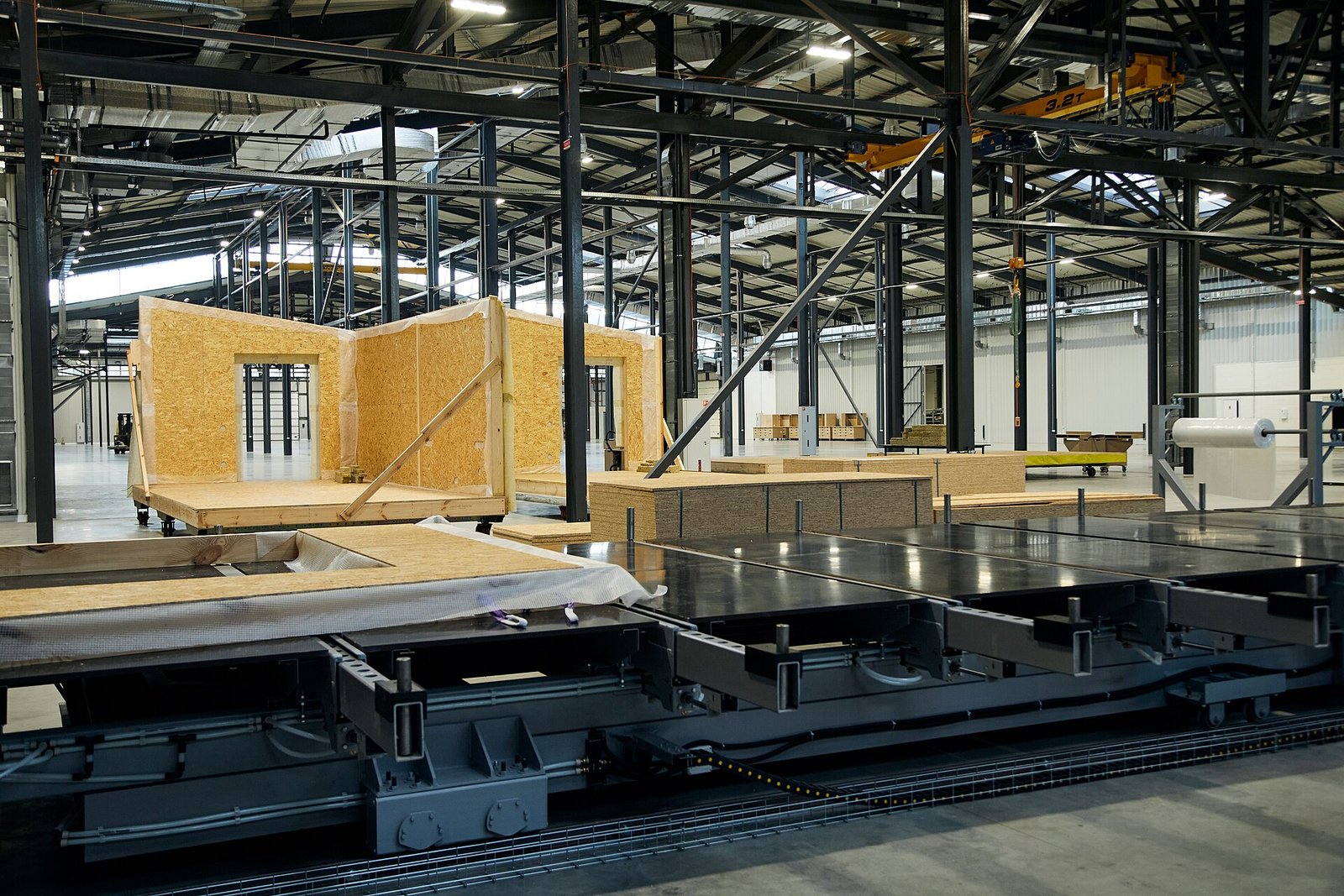
Never select a manufacturer without walking the factory floor. Look at how materials are stored, how clean the stations are, and whether workers follow a clear sequence. Ask to see modules at several stages of production, not just the finished showpiece near the office.
If you can, visit again unannounced or on a different shift. A plant that looks the same on an ordinary Tuesday as it does on a scheduled tour is usually a plant that runs well.
Check the track record
Ask for a list of completed projects similar to yours in size, building type, and construction type. Call the owners and contractors on those projects. Ask whether modules arrived on schedule, how many defects were found after the set, and how quickly the manufacturer fixed them.
Pay attention to experience with your building type. A plant that builds single-family homes may not be ready for a multistory hotel, and a plant that builds steel modules for commercial buildings may not suit wood-frame apartments.
Look at capacity and the order book
Find out how many modules the plant can produce in a typical week and how full its schedule is. A factory with a packed order book may not have room for your project when you need it. A factory with an empty one may have financial problems.
Ask how they would handle a delay on another customer’s project that pushes into your production slot. Get your production window written into the contract, along with what happens if the plant misses it.
Ask about the workforce as well. How long have the supervisors been there, and how hard is it to hire and keep line workers? High turnover on the floor tends to show up later as defects on your site.
Review financial health
Manufacturers often require large deposits before production starts, and they carry heavy costs for materials and labor before they are paid. If a plant closes in the middle of your project, those deposits and partially built modules can be hard to recover.
Ask for financial statements, bank references, and proof of insurance. Discuss whether materials bought for your project will be titled to you, stored separately, and covered by your lender’s security. Consider payment or performance bonds where available, and ask your lawyer to review how deposits are protected.
Confirm approvals and quality systems
Confirm that the plant is approved in your state’s modular program, if one exists, and that its third-party inspection agency is in good standing. Ask to see the quality control manual and recent inspection reports.
Check how the factory handles design changes, document control, and nonconforming work. A well-run plant can show you exactly how a defect is recorded, fixed, and signed off.
The right manufacturer can make an offsite project run smoothly. The wrong one can sink it. Visit the plant, call references, verify capacity and finances, and confirm approvals before you sign. Doing that homework up front costs a few weeks. Skipping it can cost the project.
Image: HutJet, via Wikimedia Commons, CC BY-SA 4.0