
Most modular projects that go sideways do not fail in the factory. They fail in the contract. The owner hired a factory, a general contractor, and an architect the same way they would for a site-built job, and nobody owned the space between the plant and the foundation. Picking the right delivery model early fixes most of that before it starts.
Why the usual playbook needs adjusting
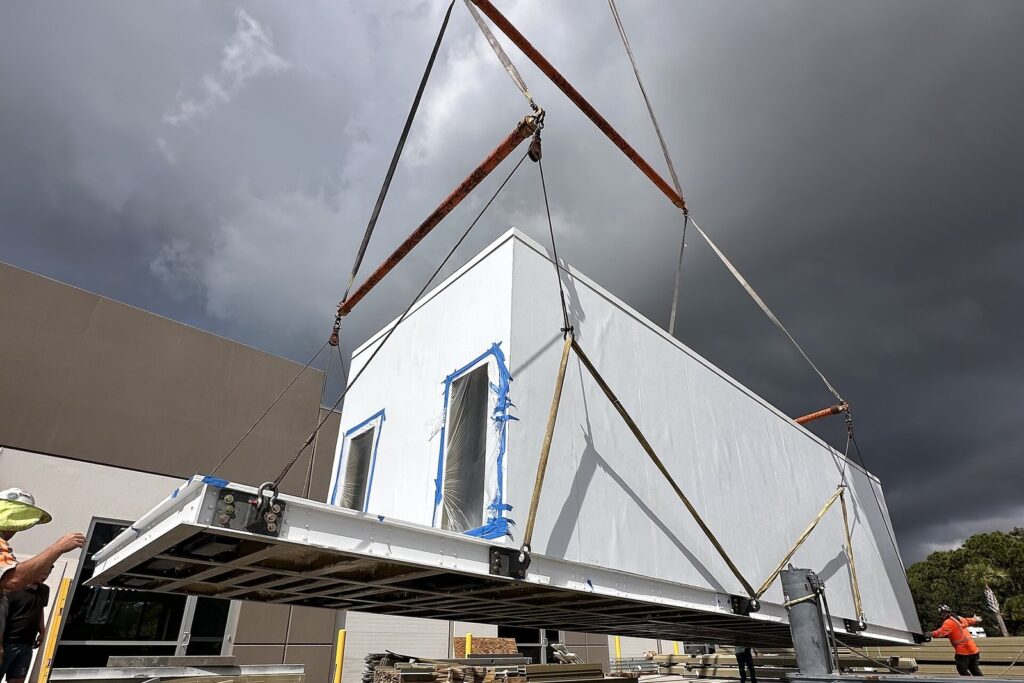
On a site-built project, design finishes, the contractor bids, and the building goes up in sequence. Modular compresses that sequence and splits the work between two places at once. The factory needs a frozen design and a deposit months before the site is ready. The site crew needs exact connection details before the first module ships. If your contract structure assumes one party builds everything in one place, you will spend the job sorting out who was supposed to do what.
The real question is who is responsible for the finished building, and who manages the handoff between factory and site? Every delivery model answers that question differently.
Factory direct with a separate site contractor
In this model the owner buys modules straight from the manufacturer and hires a general contractor for foundations, utilities, setting, and finish work. It can look cheaper on paper because there is one less markup. It also puts the owner in the middle. When a module arrives with a connection that does not line up, the factory says the site was out of tolerance and the contractor says the box was built wrong. The owner ends up refereeing.
Factory direct works best for owners who have done modular before, have their own construction managers, and are buying a repeat product they understand well.
General contractor holds the factory contract
Here the general contractor carries the manufacturer as a subcontractor and takes responsibility for the whole building. The owner gets one point of contact and one party to hold accountable. The tradeoff is cost and control. The contractor will price the risk of managing a factory it does not run, and some contractors have never managed a plant schedule before. Ask any contractor you consider how many modular jobs they have delivered, and what went wrong on the last one.
Design-build and integrated teams
Design-build puts design and construction under one contract, often with the manufacturer as a core team member from day one. This tends to fit modular well because the system has to be chosen before design gets very far. The architect designs to the module grid instead of redrawing a site-built plan later.
Integrated delivery goes a step further, with the owner, designer, contractor, and factory sharing risk and reward under one agreement. It asks a lot of trust and good governance, but it lines everyone up around the same outcome.
Contract terms that matter in every model
Whatever model you choose, a few terms deserve close attention. Define the scope boundary in writing, down to who makes each utility connection at the marriage line. Tie payments to production milestones and include clear title transfer for modules stored at the plant. Set tolerances for the foundation and the modules, and say who measures them and when. Spell out who carries the risk during transport and setting, and make sure insurance follows that risk.
Warranty is another gap. The factory may warranty the modules while the contractor warranties site work. Make sure someone owns the whole building after handover.
There is no single right answer. Experienced owners with strong internal teams can manage factory direct. Most first-time modular owners are better served by one party taking responsibility for the whole job. Choose the model before design starts, put the handoffs in writing, and the factory speed you paid for will actually show up on site.
Image: Peulle, via Wikimedia Commons, CC BY-SA 4.0
#ModularConstruction #ProjectDelivery #ConstructionContracts #OffsiteConstruction #GeneralContracting