When neighbors talk about a proposed data center, the building itself is often not the first worry. The worry is the construction. People picture years of trucks on rural roads, early morning noise, dust and detours. Those are fair concerns, and modular construction is one of the best answers the industry has.
Modular data center construction moves a large share of the work into a factory. Power rooms, cooling plants and even the IT halls can be built, wired and tested indoors, then shipped to the site and set in place. The building still goes up, but the site spends far less time as an active jobsite.
What modular construction means for a data center
A conventional build happens almost entirely in the field. Crews pour foundations, raise the structure, then bring in electricians, pipefitters and controls technicians who work side by side for months. Every trade needs deliveries, parking and staging space, and every delay ripples into the next trade.
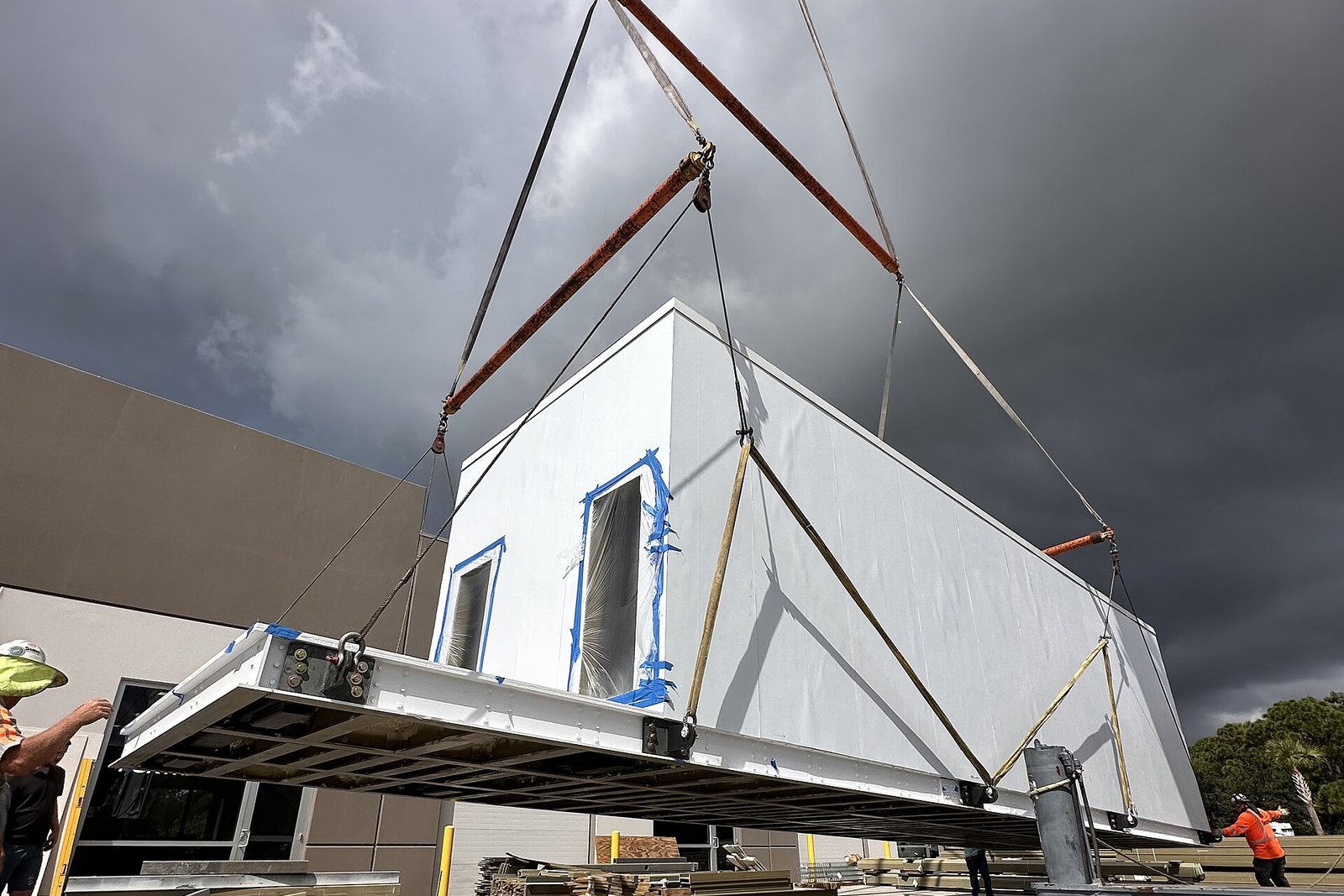
A modular build splits that work in two. Site crews prepare the ground, the foundations and the utility connections. At the same time, a factory builds prefabricated power and cooling modules, such as electrical skids, switchgear rooms and chiller plants, along with prefabricated pods for the server space. When the site is ready, the modules arrive, a crane sets them, and crews connect and commission them. The factory work and the site work happen at the same time instead of one after the other.
Faster schedules on real projects
NASA tested this approach when it needed more room for a supercomputer at its Ames Research Center in California. Its published account of the modular supercomputing facility describes a site that started as bare dirt. The module was built in Italy and shipped in containers. Once assembly began, crews joined its 15 sections and finished the roofing and interior electrical in about ten days. Setting aside an unrelated five month pause, the facility went from an unimproved lot to a working supercomputer in less than six months.
Newer work points the same way at larger scale. A Schneider Electric time study observed prefabricated IT pods going into a Compass Datacenters campus with high density, liquid cooled equipment. For the setup it studied, onsite installation time dropped from 75.5 hours to 15 hours per pod, an 80 percent reduction.
Those are single projects, and every campus is different. Still, the pattern is consistent. When the hard integration work happens in a factory, the field schedule gets shorter and more predictable.
Fewer truck trips and less noise for neighbors
A shorter field schedule matters most to the people who live nearby. Fewer weeks of active work means fewer weeks of construction traffic and noise. A conventional build brings a steady stream of trucks carrying pipe, cable trays, wire, fittings and packaging for each trade. With modular work, much of that material goes to the factory instead, and the site receives finished modules on a planned delivery schedule.
Noise follows the same logic. Cutting, grinding, welding and fastening that would happen outdoors on a conventional site happen inside a factory building. What remains on site is the foundation work, the crane lifts, and the final connections. Developers can plan large deliveries and crane days around school hours and local traffic, and share that schedule with neighbors in advance.
Less schedule risk for counties and utilities
Local governments care about schedule because tax revenue and jobs depend on when a facility opens. Utilities care because they plan substations and lines around a customer’s in service date. Modular construction helps both by reducing the number of things that can go wrong in the field. Weather has less effect on factory work, and testing happens before equipment ever leaves the plant.
Modular does not remove local jobs. Site crews still handle grading, foundations, underground utilities, crane work, electrical tie ins and commissioning. Many states also have factories that build these modules, which means the manufacturing work can stay in the region.
A better way to build what communities need
Residents who raise construction concerns deserve a real plan, not a promise. Modular construction gives developers a concrete one, with a shorter build, fewer trucks and quieter sites. Officials weighing a proposal should ask how much of the work will happen offsite, and developers should be ready with a clear answer.
Image: “Modular Data Center” by Tsgrayson, via Wikimedia Commons, CC0 1.0 public domain dedication, cropped.
#DataCenters #ModularConstruction #OffsiteConstruction #Prefabrication #EconomicDevelopment