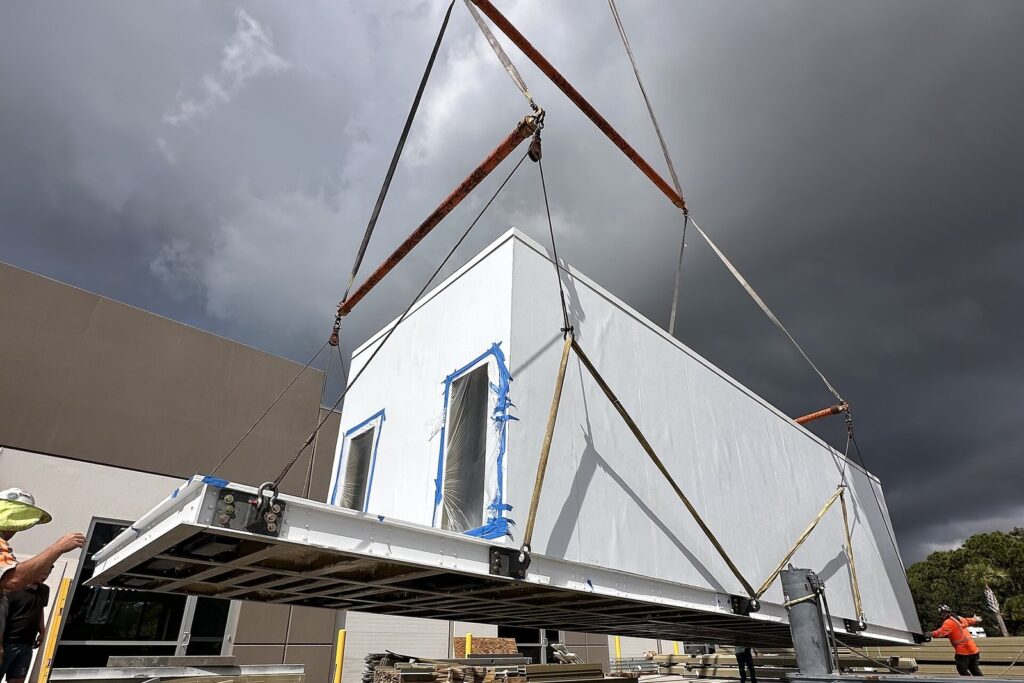
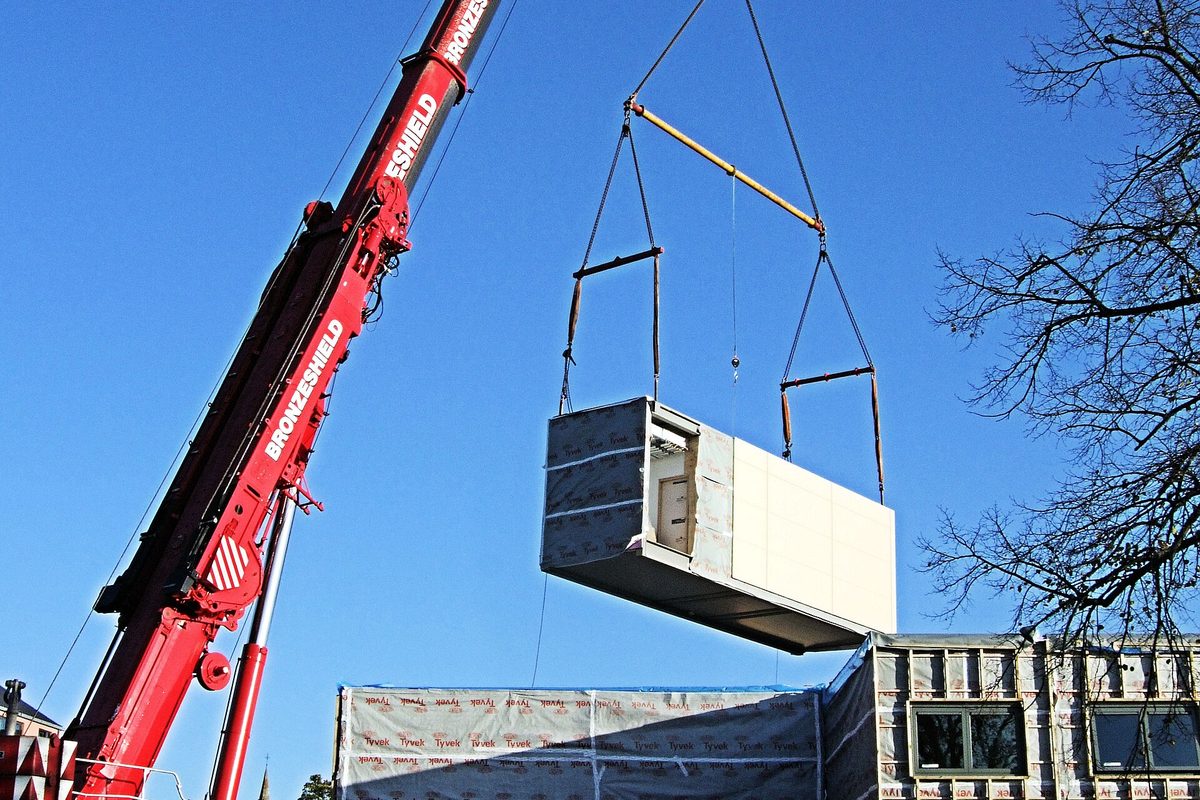
A site-built project sits in one place from the first footing to the last coat of paint, and most insurance programs are written with that in mind. A modular project does not sit still. Each module is built in a plant, stored in a yard, loaded on a truck, driven down the highway, and lifted over the site on a crane hook. Every one of those moves is a chance for damage, and every one can fall between policies if nobody plans for it.
Where the coverage gaps show up
Traditional builder’s risk covers the work at the jobsite. Many policies say little or nothing about property sitting in a factory two states away. The manufacturer usually insures its own plant and inventory, but that coverage may end once a module is finished, invoiced, or paid for. If the owner has taken title to stored modules to support a draw, the owner may hold a damaged asset that no policy clearly covers.
Transit is the next gap. Carriers have cargo coverage, but their limits are often set for ordinary freight, not for a finished module worth far more than a typical load. Setting adds another layer, since a dropped module can involve the crane company, the setter, the general contractor, and the factory all at once.
Map the risk before you buy the policy
Start by tracing the path of a single module, from the day framing starts in the plant to the day the building is turned over. At each step, write down who owns the module, who has physical control of it, and whose policy responds if it is damaged. Owners, lenders, and contractors are often surprised by how many blanks that exercise turns up.
Then compare that map against your contracts. Title transfer, risk of loss, and indemnity terms should line up with the insurance. If the contract says risk passes to the owner when a module leaves the plant, the owner needs coverage that starts at the plant gate, not at the jobsite fence.
Coverage to ask your broker about
Ask whether your builder’s risk policy can cover property stored off site and property in transit, and confirm the limits for each location. Some carriers will extend coverage to the factory and the road by endorsement. Others will want a separate cargo or inland marine policy.
Ask the manufacturer for its certificates and read the actual policy terms, not just the summary. Confirm when its coverage ends and whether you can be named as an additional insured or loss payee on stored modules. Do the same with the transport company and the crane contractor. Rigging and lifting coverage deserves a close look, because a crane operator’s liability policy may not pay for damage to the load itself.
Weather is worth its own conversation. Modules often sit partly open between setting and final weatherproofing, and water getting into finished interiors is a real risk during that window. Know your deductible and any weather exclusions before the first box is set.
What lenders and investors will want to see
Lenders financing factory deposits and stored modules want proof that their collateral is insured wherever it sits. Expect them to ask for loss payee status on off-site property and for evidence of transit coverage before they fund a draw. Private equity investors doing diligence on a modular platform will look for the same thing across the portfolio. A clean, documented insurance program makes those conversations shorter.
Insurance on a modular job is not harder than on a site-built one. It just has more handoffs. Bring your broker in early, walk them through how the modules move, and make sure every step from factory floor to final set has a policy behind it. The cheapest time to close a gap is before anything leaves the plant.
Image: Jim Linwood, via Wikimedia Commons, CC BY 2.0, cropped
#ModularConstruction #BuildersRisk #ConstructionInsurance #OffsiteConstruction #ProjectDelivery