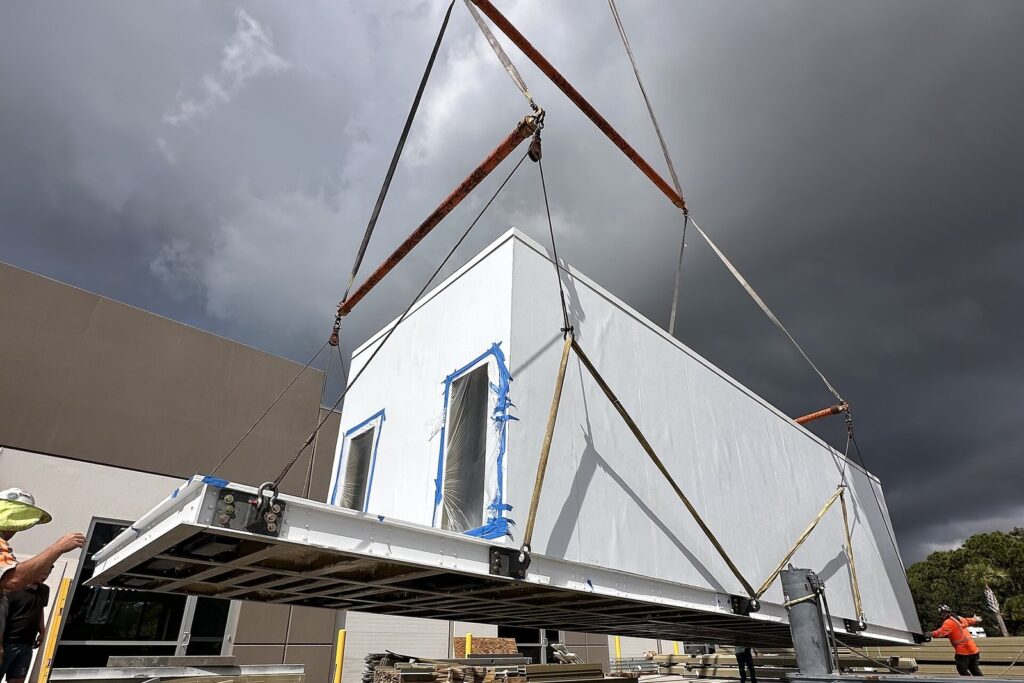

A modular building is finished in two places. Most of the work happens in a factory, and the rest happens on site when the modules are set, connected, and tied into utilities. That split is good for speed and quality, but it makes the warranty picture harder to read. When a leak or a crack shows up a year after move in, the owner needs to know who answers the call.
Why modular warranties get confusing
On a site-built project, the general contractor usually stands behind the whole building. On a modular project, there are often at least three parties with a hand in the finished product. The manufacturer built the boxes. The setter placed them and made the marriage line connections. The general contractor handled the foundation, site utilities, roofing tie-ins, and finish work. Each one may offer a different warranty with different terms, and the gaps between them are where disputes start.
A common example is a ceiling stain near a module seam. The factory may say the module left the plant sealed and dry. The setter may say the connection was made to the drawings. The contractor may say the roof was installed correctly. Without clear language up front, the owner ends up paying for the investigation before anyone pays for the repair.
What the manufacturer usually covers
Most manufacturers warrant the work done inside their plant. That typically includes the structure of each module, factory-installed plumbing and electrical, windows, doors, and finishes they supplied. Terms vary, but a short workmanship period of about one year and a longer structural period are both common.
Read the exclusions carefully. Many factory warranties do not cover damage in transit, problems caused by an uneven foundation, or anything touched by a site crew after delivery. Some also require the owner to report defects within a set window and in writing.
What the site contractor and setter cover
Everything that happens after the modules leave the plant usually falls to the people on site. That includes the foundation, the set itself, marriage line connections, weather sealing between modules, utility hookups, and any site-built additions such as porches, garages, or stairs. On many projects this is where most warranty claims come from, because seams and connections are the weak points of any modular building.
Owners should ask who is responsible for the setter’s work. In some contracts the factory hires the setter. In others the general contractor does. Whoever holds that contract should carry the warranty for it, and the agreement should say so plainly.
How to close the gaps before handover
Sort out warranties before the contract is signed. A few habits make a real difference.
Put a single point of contact in the contract for warranty calls. That party coordinates the rest, so the owner only makes one call.
Write a responsibility matrix that lists each building system and names who warrants it. Pay special attention to seams, roofing tie-ins, and utility connections between modules.
Document the condition of each module at delivery with photos and a signed checklist. That record settles many disputes about whether damage came from the plant, the road, or the site.
Collect every warranty document, product manual, and inspection record at closeout and keep them in one place.
Plan for the first year
Modular buildings can settle slightly as the structure adjusts to the foundation and the seasons. Minor drywall cracks at seams are not unusual in the first year. Schedule a walkthrough with the contractor and manufacturer before the shortest warranty period ends, and fix those items together while everyone is still on the hook.
A clear warranty plan protects the owner, but it also protects the builders. When everyone knows their part before handover, small problems get fixed quickly and the project keeps the reputation it earned in the factory.
Image: “Plot 15 The Modular House” by Tom Parnell, via Wikimedia Commons, licensed CC BY-SA 2.0.
#ModularConstruction #BuildingWarranties #OffsiteConstruction #ConstructionRisk #ProjectDelivery