The ribbon cutting is the start of the story, not the end. A data center host community lives with the facility for decades, so the useful question is what happens to the town in the years after the doors open. Researchers and state agencies now have enough records to give a real answer.
The answer is mostly good news, with a few honest limits. It is worth knowing before anyone votes on a pause.
What the data shows about a data center host community
Two Georgia Tech researchers, Daniel Yue and Yiyang Zeng, compared counties before and after their first data center opened with similar counties that had none. In their summary of the study, they report that in the first three years local employment rose about 0.9 percent, wages rose 1.1 percent, and the number of business establishments rose 1 percent. Over the longer term those gains grew to about 3.5 percent, 5 percent, and 4.7 percent. Household income rose 1.9 percent and building permits rose 16.1 percent. They also noted that the gains build gradually instead of arriving all at once.
In plain terms, a town does not transform overnight. It changes the way a healthy town does, with more businesses, bigger paychecks, and more building.
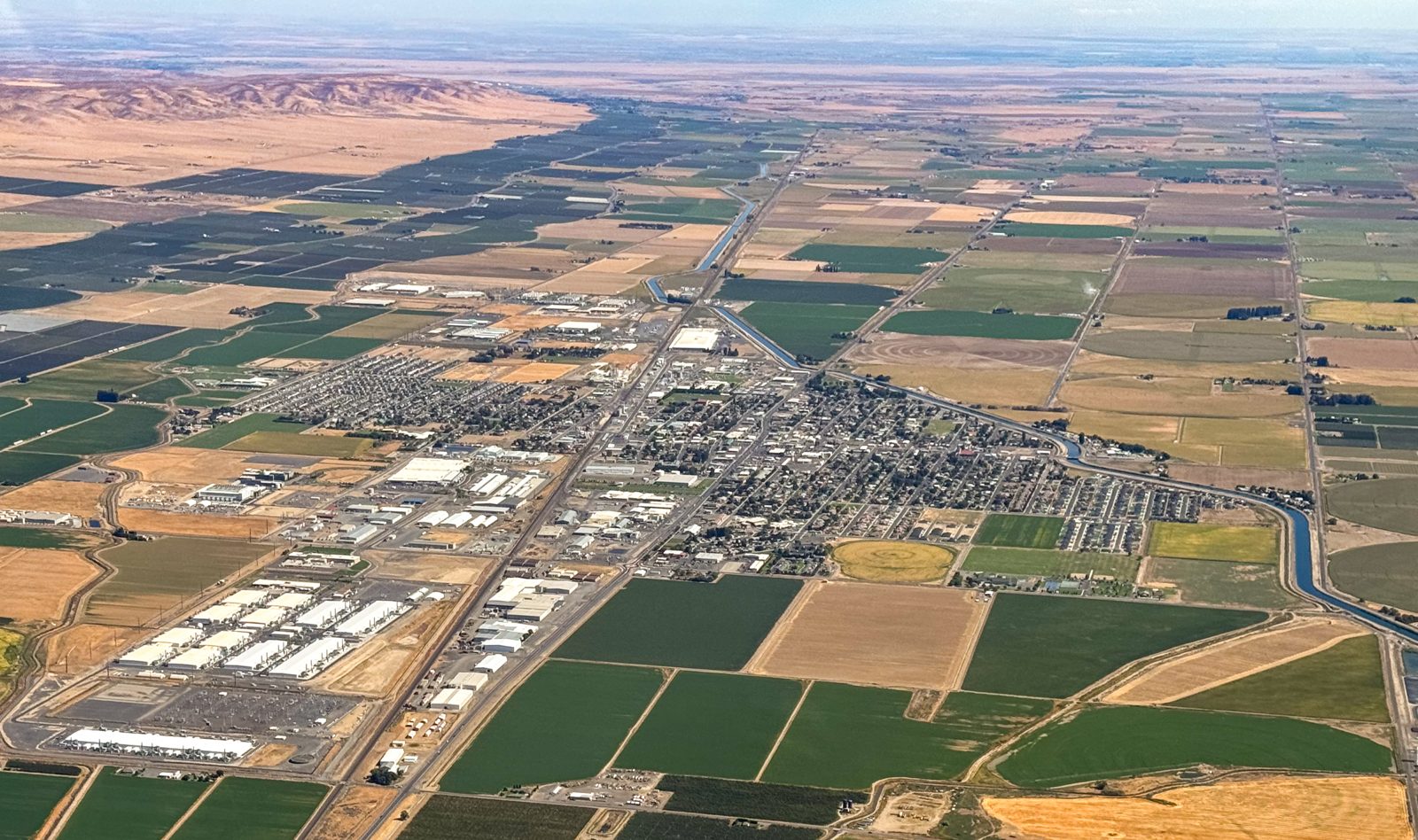
Quincy, Washington: lower tax rates and new public buildings
Quincy is a town of about 8,500 people in Grant County. Washington’s Department of Revenue convened a Data Center Workgroup, and its 2025 preliminary report looked at the tax rolls. In 2006, before data centers located in the county, the top 10 taxpayers had an assessed value of about $313 million and paid about $4.2 million in tax. In 2025 those ten had an assessed value of about $6.14 billion and paid about $54.3 million. Seven of the ten were data centers, and six of those seven are in Quincy.
What matters most to residents is the tax rate. The report says the city’s property tax levy rate fell from $3.12 per $1,000 of assessed value in 2006 to $0.87788 in 2025, about 70 percent lower. It credits the added assessed value with helping the city build or replace a wastewater treatment plant, a reuse water system, schools including a new high school, a hospital, a city hall, a fire station, and a public safety building. Sidewalks went from about 5 percent of city streets to about 80 percent, and 95 percent of streets are now paved.
Where the benefits are thinner
The sources do not claim every town gains equally. The Georgia Tech researchers found that job and wage gains were negligible in less populous counties, while in metropolitan counties employment rose about 4.1 percent and wages rose 5.5 percent. They concluded that the local economy around a data center matters more than the facility itself. They also estimated that retail electricity prices rose about 5 percent after a data center became operational, and they said that figure is hard to pin down because utility territories often span several counties.
A University of North Carolina working paper, in a draft dated August 14, 2026, points the same way on taxes. Its authors found that a county’s property tax base grew about 1.2 percentage points per year faster than in matched counties after a data center arrived, and that effective property tax rates fell as more capital was installed. Home prices rose 4.5 percent. They also found no significant effect on school metrics such as test scores or teacher salaries, and counties that hosted speculative cryptocurrency mining sites saw essentially no gain in home values. To me, that says the new revenue does not reach classrooms on its own. A town has to decide where it goes.
What a host community should plan before opening day
Local officials can ask a few direct questions. Who is the operator, and is the facility built to last? How much will the tax base grow, and what share will go to lower rates, schools, and public safety? Answering those questions early lets a town set the terms instead of reacting later.
A moratorium settles the question before a town has a chance to see the results. The records from places like Quincy show what can happen when a community welcomes the investment, plans for the revenue, and spends it on things residents can see.
Image: “Quincy Washington – aerial” by Tedder, via Wikimedia Commons, CC BY-SA 4.0, resized.
#DataCenters #EconomicDevelopment #LocalGovernment #CommunityDevelopment #PublicFinance